


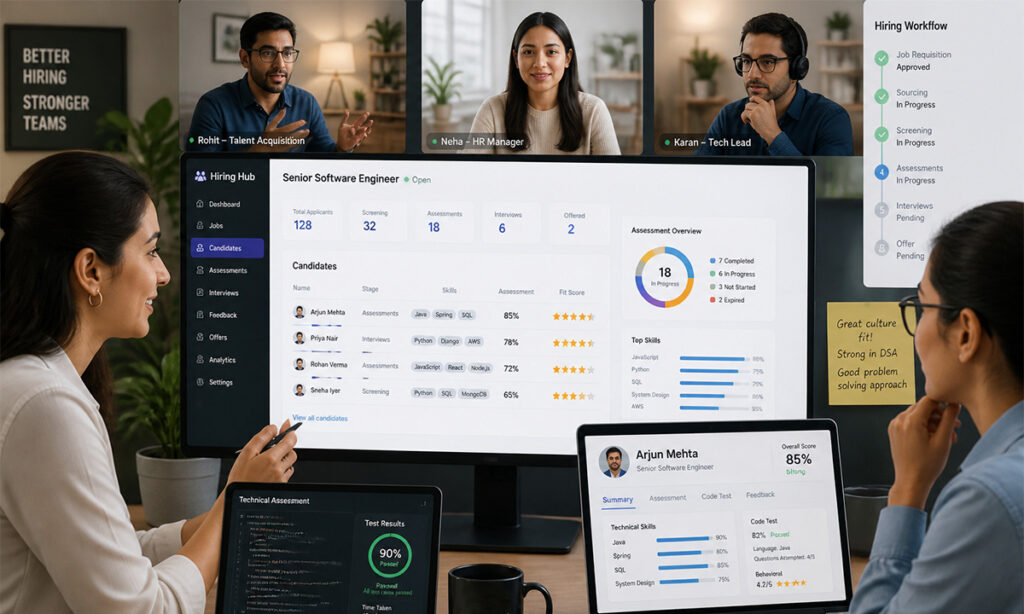
Remote hiring has become increasingly common as businesses look to access wider talent pools and build flexible teams. While hiring remote employees in India offers many advantages, it also brings unique recruitment and workforce management challenges. Companies need structured processes and clear strategies to ensure successful remote hiring.
One of the biggest remote hiring challenges is evaluating candidates effectively without face-to-face interaction. Hiring managers often find it difficult to assess communication skills, work discipline, and cultural fit through virtual interviews alone. To solve this, companies should use structured video interviews, practical assignments, and behavioural assessments to evaluate candidates more accurately.
Another common challenge is verifying candidate authenticity and experience. Since the hiring process is conducted remotely, businesses may face issues related to inaccurate resumes or unverifiable work history. Background verification, reference checks, and technical assessments help reduce hiring risks and improve trust during remote recruitment.
Communication barriers can also affect remote hiring and onboarding. Delayed responses, unclear expectations, and poor coordination often create confusion for both recruiters and candidates. Companies should maintain clear communication throughout the recruitment process and use collaboration tools for smoother interaction.
Technology dependency is another major challenge. Remote hiring requires stable internet access, video conferencing platforms, applicant tracking systems, and digital onboarding processes. Companies should ensure both recruiters and employees have access to reliable technology and support systems to avoid disruptions.
Maintaining company culture in remote hiring can be difficult as well. Employees working remotely may feel disconnected from the organisation, especially during the initial stages. Businesses should conduct virtual onboarding sessions, regular team interactions, and clear communication to improve engagement and integration.
Time management and productivity concerns are also common in remote work environments. Some companies worry about employee accountability when teams work from different locations. Setting clear performance expectations, using task management tools, and scheduling regular check-ins can help improve transparency and productivity.
Another challenge is hiring the right talent quickly. Skilled remote professionals are often in high demand and may receive multiple offers. Businesses should streamline interview rounds and maintain quick communication to avoid losing strong candidates to competitors.
Working with a recruitment agency in India or an HR consultancy in Delhi NCR can simplify remote hiring. Recruitment experts use targeted sourcing strategies, structured evaluations, and ready talent networks to identify suitable remote candidates efficiently.
In conclusion, remote hiring offers businesses flexibility and access to wider talent pools, but it also requires proper planning and structured processes. Companies that address communication, evaluation, technology, and onboarding challenges effectively can build productive remote teams and support long-term business growth.